
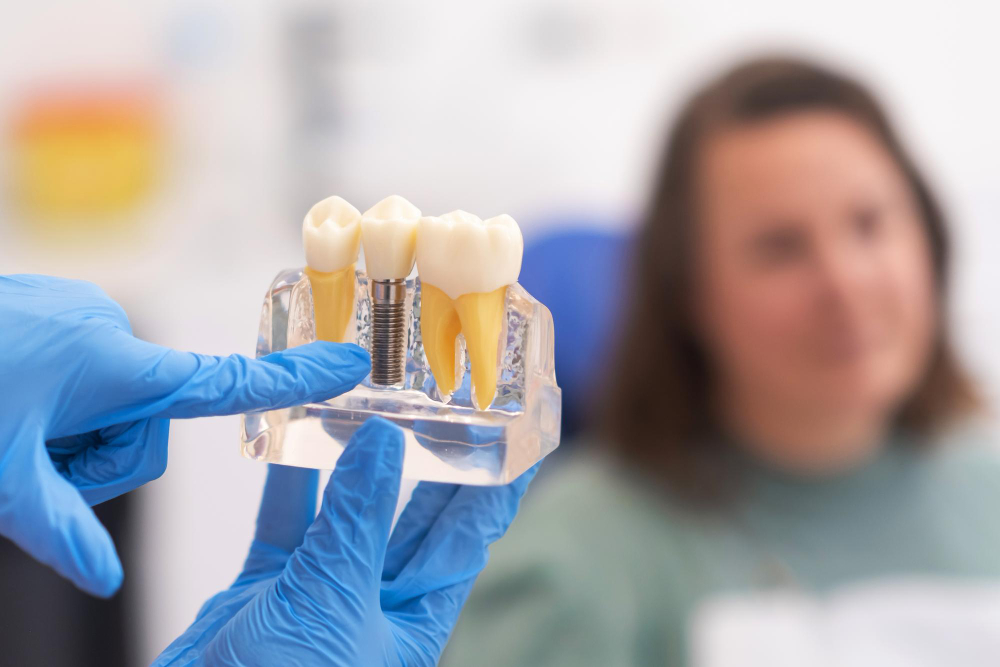
What Are Dental Implants?
Dental implants are strong, artificial tooth roots. Dentists use them to replace missing teeth. Usually, they are made from titanium, which is safe for your body. Because dental implants look and feel like real teeth, many people choose them as a tooth replacement option. In fact, dental implants can help you chew, speak, and smile with confidence.
Symptoms or Signs You May Need Implants
Sometimes, you may notice signs that suggest you need dental implants. For example, you might:
Additionally, if you feel embarrassed to smile, dental implants may help restore your confidence.
Causes of Tooth Loss Leading to Implants
Tooth loss can happen for many reasons. Often, these include:
Because missing teeth can affect your health, it is important to seek help early.
Diagnosis and Assessment for Implants
First, your dentist will check your mouth and health history. Next, they may take X-rays or 3D scans. These tests help your dentist see your jawbone and plan the implant procedure. Sometimes, your dentist may ask about your daily habits, such as smoking or teeth grinding. After the assessment, your dentist will discuss if dental implants are right for you.
Treatment Process: How Implants Are Placed
The dental implant procedure happens in steps. Here is what you can expect:
Because the process takes time, your dentist will guide you at each step.
Benefits and Risks of Dental Implants
Dental implants offer many benefits. For example, they:
However, there are some risks. These may include:
Still, most people have successful results. According to the CDC and dental journals, dental implants are safe for most adults.
Aftercare and Lifestyle Guidance
After getting dental implants, you need to care for them like real teeth. For best results:
Because good habits help your implants last longer, follow your dentist’s advice closely.
Prevention of Tooth Loss
Although dental implants are a great tooth replacement option, it is best to prevent tooth loss. You can protect your teeth by:
Because prevention is easier than treatment, start healthy habits early.
Conclusion
Dental implants can restore your smile and improve your quality of life. However, every person is different. For personalized advice on dental implants, consult a dental specialist at Smile More Dental Hospitals